Presentation
Research modern control and optimization technologies to help industry and society control and optimize their processes.
The main mission of the research unit DYSCO (Dynamical Systems, Control, and Optimization) is to develop new methodologies for the design of advanced multivariable controls that make systems react autonomously and optimally. Research revolves around model predictive control of dynamical systems, with specific emphasis on developing new algorithms for real-time convex embedded optimization, system identification and machine learning.
Besides focusing on algorithms and understanding their theoretical properties, research results are constantly applied to real-life problems of industrial, economic, and societal interest, such as in the automotive and aerospace industries, energy, process control, and financial engineering.
DYSCO is part of the research area in Computer Science and Engineering at the IMT School for Advanced Studies Lucca, Italy.
People
Professors Tenure-track assistant professors- Filippo Fabiani
- Mario Eduardo Villanueva
- Puya Latafat
- Pablo Krupa
- Sampath Kumar Mulagaleti
- Shokhjakhon Abdufattokhov
- Adeyemi Adeoye
- Filippo Badalamenti
- Chiara Cavalagli
- Hasna El Hasnaouy
- Matteo Facchino
- Yuxuan Guo
- Mikalai Korbit
- Stefano Menchetti
- Francesco Pillitteri
- Hamid Salekinia
- Saugat Shahi
- Kui Xie
Research topics
Model Predictive Control (MPC)
Model Predictive Control (MPC) is widely adopted in
industry for real-time control of large multivariable
processes to optimize process operations under the best
use of limited resources. The main idea of MPC is to
choose the control action by solving an optimal control
problem on line that minimizes a performance criterion
over a future horizon, subject to constraints on process
variables. The research unit investigates several issues
in MPC, such as: stochastic MPC for constrained linear
systems, decentralized and hierarchical MPC for
spatially-distributed large-scale systems, MPC of
networked systems based on wireless sensor feedback,
explicit MPC and multiparametric programming for linear,
hybrid, uncertain, and quantized systems.

Numerical optimization Numerical optimization algorithms for solving convex and non-convex mathematical programming problems, related to embedded MPC systems and to a large variety of areas, such as machine learning, various branches of engineering, and economics.
Machine learning and system identification
We develop new algorithms to learn dynamical models
from data, with emphasis on linear parameter varying, piecewise affine, and general nonlinear models, and to learn control policies from data (reinforcement learning).
PhD courses
We offer the following PhD courses at IMT Lucca:
- Model Predictive Control
- Numerical Methods for Optimal Control
- Introduction to Machine Learning
- Numerical Optimization
- Reinforcement Learning
- Identification, Analysis, and Control of Dynamical Systems
Software Tools
MATLAB/Python packages for real-time model predictive control, numerical optimization, system identification:
- Model Predictive Control Toolbox (The Mathworks)
- Hybrid Toolbox
- jax-sysid - Linear and nonlinear system identification of state-space models
- IDEAL - Inverse-Distance based Exploration for Active Learning
- PARC - Piecewise Affine Regression and Classification
- GLIS - Global and preference-based optimization of expensive black-box functions
- Fitting Jump Models
- ForBES - A MATLAB solver for nonsmooth convex optimization problems
- MPCTOOL (European Space Agency)
- MPCSofT (European Space Agency)
Applications
Automotive control systems
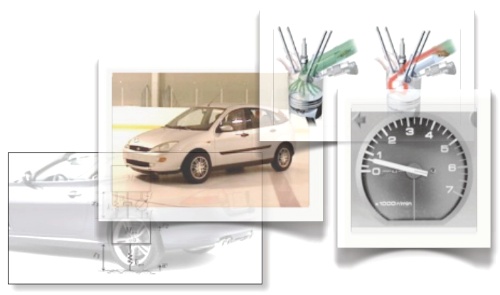
Autonomous driving, traction control, direct-injection engine control, semi-active suspensions, electromagnetic actuators, adaptive cruise
control, robotized gearboxes, air-to-fuel ratio, active
steering, idle speed control, power management and thermal
management in hybrid electrical vehicles.
Aerospace control
Satellite attitude control, control of sloshing, guidance,
navigation and control unmanned aerial vehicles
(including formation flying and rendezvous), control of
powered descent.
Industrial process control
Control of gas turbines, gas supply systems, flatness in
cold tandem rolling, solar plants, cement mill scheduling.
Energy, management, and finance
Optimal bidding on energy markets, optimal power
dispatch in smart grids, management of water
distribution networks and sewer networks, dynamic
hedging of financial options, optimal issuance of public
debt securities.
Collaborations
The research unit collaborates with several European and American companies in applied research projects. The unit also has scientific collaborations with several universities worldwide.
Funding
See here.
Events
See here.
Spinoff company
ODYS Srl
Founded in 2011 as the first spinoff of IMT, ODYS S.r.l. is
an independent company specialized in providing
consultancy services and software for the
development of industrial model predictive control
systems.